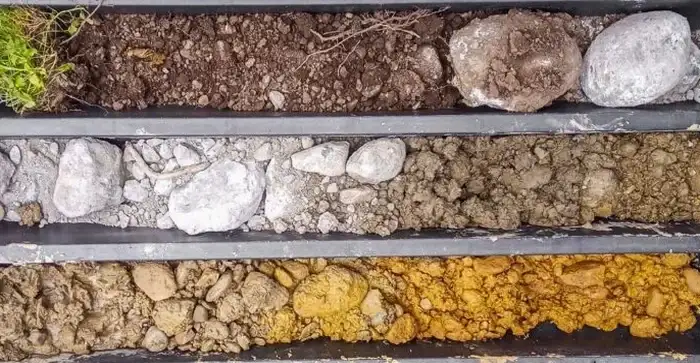
A commercial build-out off King Avenue West hit a buried lens of fat clay at four feet. No driller had seen it coming. The general contractor called us to open three pits the next morning. Our crew exposed the sequence from topsoil to weathered shale in less than a day. That is the core advantage of an exploratory test pit in Billings — direct visual access. You see the strata. You touch the material. You photograph the contact zones. When the Yellowstone River's historic channels leave behind erratic alluvium, a grain-size analysis from pit samples confirms whether the fines content matches the plasticity you observe in the field. We execute pits to eight feet routinely, and to twelve feet where site logistics allow. No drilling fluid. No disturbed cuttings. Just a clean vertical face for logging, sampling, and immediate classification per ASTM D2487. For sites on the Rimrocks where sandstone benches are suspected within three feet of grade, a test pit often replaces a boring program entirely, saving the owner thousands in mobilization cost.
A test pit replaces three days of drilling and lab turnaround with one day of direct observation, immediate logging, and same-day classification.