GEOTECHNICAL ENGINEERING
BILLINGS
HomeInvestigationCPT (Cone Penetration Test)

CPT Testing in Billings: Rapid Subsurface Profiling for Yellowstone Valley Projects

Evidence-based design. Reliable delivery.

LEARN MORE

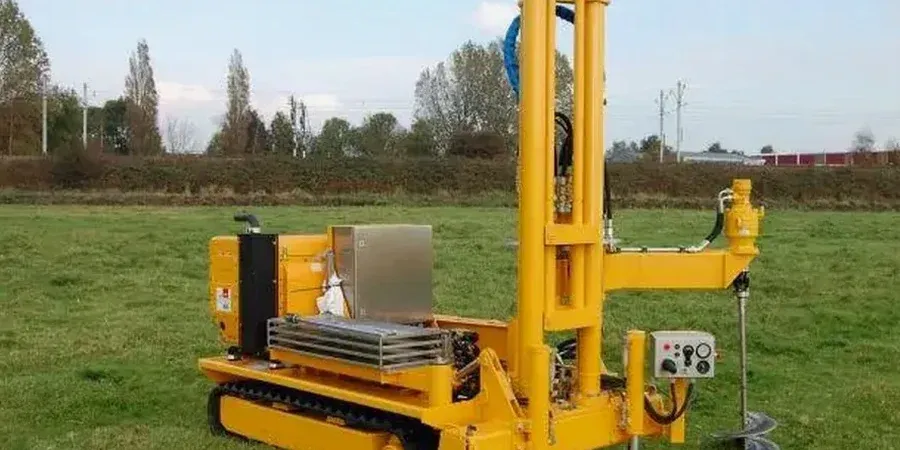
The hydraulic rig anchors itself against the truck's weight, and the hardened steel cone begins its steady push into the Billings subgrade at a constant 2 cm/s. We monitor the digital readout as tip resistance and sleeve friction translate in real time into a stratigraphic profile of the Yellowstone Valley deposits. Unlike standard drilling methods that retrieve disturbed samples from discrete depths, the CPT string captures a continuous log of soil behavior, which is critical when delineating the interbedded silts, sands, and the underlying Colorado Group shale that defines much of the subsurface beneath Billings. Before placing footings on the South Side or designing deep excavations near the Rimrocks, the data from a CPT test provides the near-continuous profile needed to catch thin, problematic lenses that a conventional boring might miss entirely.

A single CPT sounding in the Billings area can replace three or four standard borings when the goal is to map stratigraphic continuity across a site.
Our service areas

Our approach and scope

Billings grew in distinct phases, from the railroad-era warehouses near the tracks to the mid-century subdivisions that climbed the sandstone benches overlooking the valley. Each phase left a different geotechnical footprint: historic fill mixed with river cobbles downtown, expansive clay remnants up on the West End, and varying thicknesses of terrace gravels across the Heights. When we push a cone through these transitions, the friction ratio shifts dramatically within a few vertical inches, flagging a change in depositional environment that directly affects bearing capacity calculations under IBC Chapter 18. For projects where fill control is paramount, we often pair the CPT campaign with sand cone density testing to verify compaction on the same site, ensuring that the upper engineered layer and the deeper natural strata both meet the project specifications without ambiguity.
CPT Testing in Billings: Rapid Subsurface Profiling for Yellowstone Valley Projects
Technical reference — Billings

Local geotechnical context

A project in the Lockwood flats versus one up on the benchlands near Rocky Mountain College demands two entirely different CPT strategies. The low-lying areas near the Yellowstone River often present saturated, loose alluvial sands that are prime candidates for liquefaction assessment; here the cone penetrates easily past 80 feet, and the derived cyclic resistance ratio governs the foundation depth. In contrast, sites perched on the exposed sandstone and shale of the Rims frequently encounter refusal within 15 to 25 feet, requiring a switch to rock coring once the CPT reaches the weathered bedrock interface. Misjudging that transition zone can lead to underestimating differential settlement, especially where shallow footings bridge across residual clay pockets that the cone profile reveals as sudden drops in tip resistance.

Need a geotechnical assessment?

Reply within 24h.

Email: contact@geotechnicalengineering.biz

Relevant standards

ASTM D5778-20: Standard Test Method for Electronic Friction Cone and Piezocone Penetration Testing of Soils, IBC 2024 Section 1803: Geotechnical Investigations (adopted by Billings Building Division), ASCE 7-22 Chapter 20: Site Classification Procedure for Seismic Design, Robertson & Cabal (2015) Guide to Cone Penetration Testing for Geotechnical Engineering

Technical data

ParameterTypical value
Maximum Push Capacity20 tons (200 kN)
Standard Cone Type10 cm² electric friction cone (ASTM D5778)
Typical Investigation Depth60 to 100 ft, depending on shale refusal
Measured ParametersTip resistance (qc), Sleeve friction (fs), Pore pressure (u2), Depth
Derived Soil TypesBased on Robertson (1990) SBTn classification charts
Data Acquisition Rate10 mm intervals (continuous digital log)
Applicable StandardASTM D5778-20, IBC 2024

Q&A

What is the typical cost range for a CPT test in Billings?

Mobilization and testing for a single CPT sounding within the Billings metro area typically falls between US$180 and US$270 per hour on site, depending on access conditions, required depth, and whether a piezocone module is specified. Most commercial and residential investigations run one to three soundings, and we carry out a fixed-price quote after reviewing the site location and project scope.

How does CPT compare to standard drilling and SPT borings in the Billings area?

CPT provides a continuous, high-resolution record of soil behavior that eliminates the depth gaps inherent in SPT sampling. In the Yellowstone Valley, where thin silt seams between sand layers control drainage and settlement, CPT catches those transitions that a 5-foot SPT interval would miss. The trade-off is that CPT cannot penetrate dense gravels or cobbles as effectively as auger drilling, so on sites with thick alluvial fan deposits we often recommend a hybrid program using both methods.

What site preparation is needed before the CPT rig arrives?

Our 20-ton CPT truck requires firm, level access with a minimum overhead clearance of 18 feet. On undeveloped lots in the Billings area, we may need the contractor to strip topsoil and carry out a compacted gravel pad if recent rain has saturated the native clay. Underground utility clearance through Montana 811 is mandatory at least 48 hours before mobilization, and we coordinate with the project engineer to confirm sounding locations relative to existing structures and easements.

Location and service area

We serve projects in Billings and surrounding areas.

View larger map