GEOTECHNICAL ENGINEERING
BILLINGS

Geotechnical Engineering in Billings

Evidence-based design. Reliable delivery.

LEARN MORE

Billings has always been a city shaped by its geology. Long before the Northern Pacific Railroad arrived in 1882, the massive sandstone Rimrocks that define the city's northern edge were being carved by the Yellowstone River, creating a unique landscape of escarpments and alluvial terraces. Today, as the city expands southward across ancient river deposits and westward into the foothills, the complexity of the subsurface has become a defining factor in construction. A properly executed soil mechanics study is not a simple checkbox; it is the fundamental investigation that distinguishes a foundation designed for the specific challenges of Montana's largest city from one that is merely generic. The interplay between the hard, occasionally fractured Rimrock sandstone and the softer, expansive clays of the valley floor requires a level of geotechnical insight that goes far beyond standard bore log recording. When beginning a project near the Heights or along Shiloh Road, the first step is understanding how these ancient fluvial processes deposited the soils beneath the site. Our laboratory, operating under an ISO 17025-accredited quality system, approaches each soil mechanics study with the rigor required by ASCE 7 and the locally adopted IBC, integrating field data with advanced testing to produce foundation recommendations that account for Billings’ variable overburden and shallow groundwater conditions typical of the lower terraces.

In Billings, the most critical geotechnical boundary is often the contact between valley alluvium and the underlying Rimrock formation, where seepage and differential stiffness govern foundation performance.
Geotechnical Engineering in Billings
Technical reference — Billings

Our service areas

Local geology

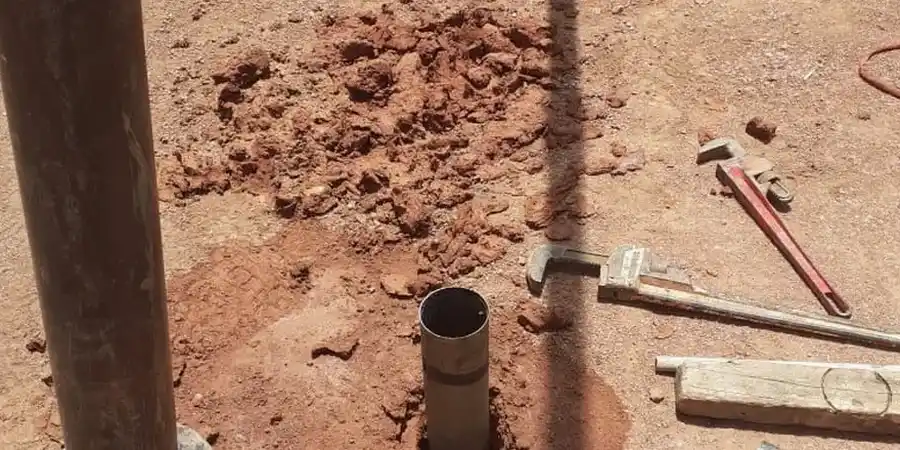
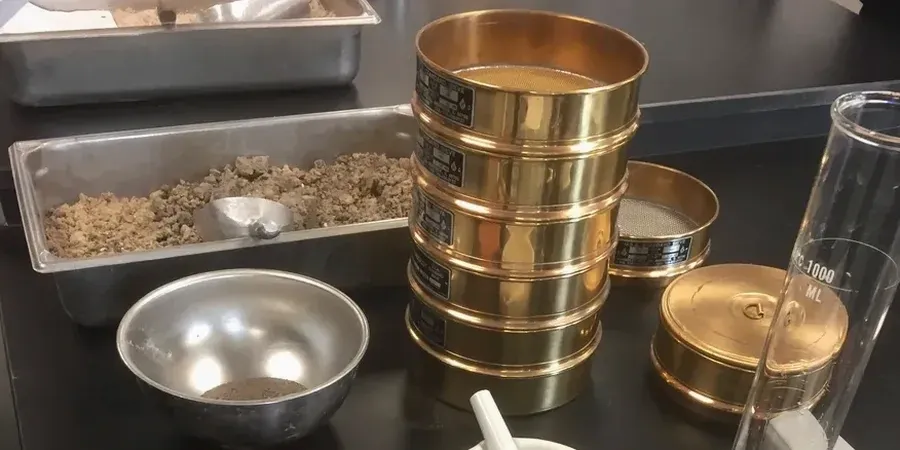
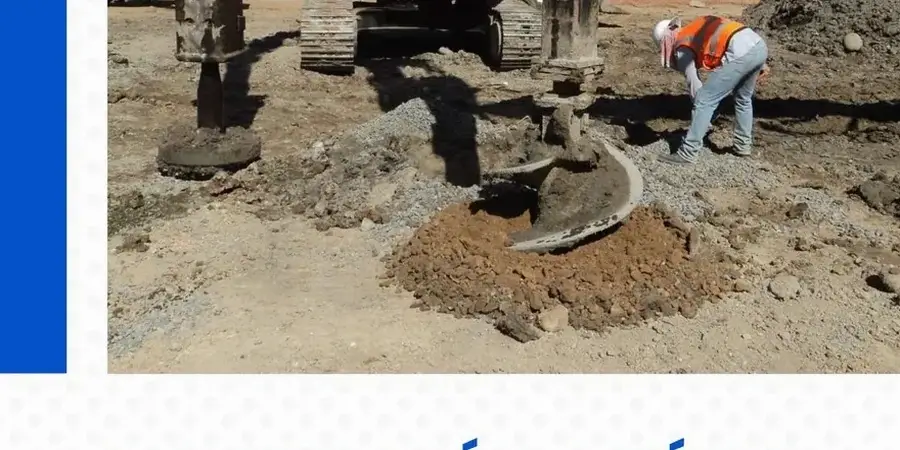
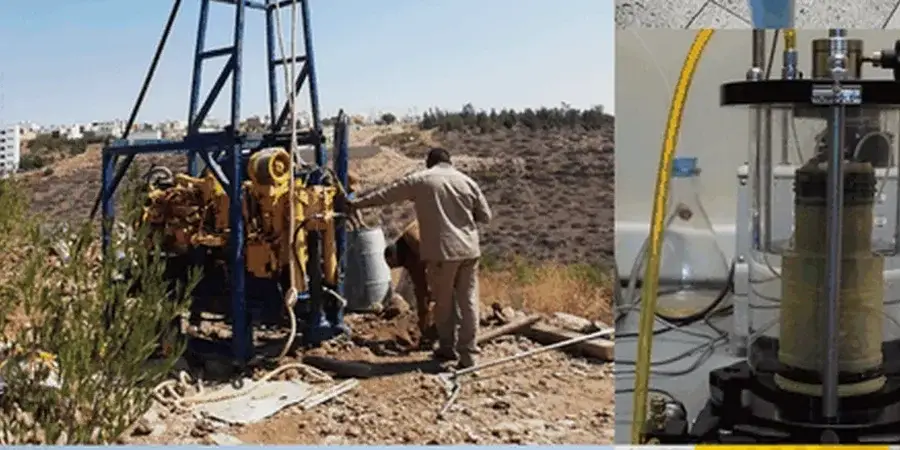
The geotechnical contrast between a site on Billings' West End and one in the older downtown core is striking. On the West End, terraces of Pleistocene-age gravels and cobbles provide excellent bearing capacity, often exceeding 4,000 psf, but their heterogeneous nature demands careful interpretation during a soil mechanics study to identify potential lenses of finer silts that could cause differential settlement. Downtown, closer to the river, the profile often reveals sequences of fat clays and silty sands that require a nuanced assessment of consolidation characteristics and shrink-swell potential. Understanding this variability is why we integrate the soil mechanics study with targeted field exploration methods. For instance, in areas with gravelly deposits we often correlate Standard Penetration Test data from SPT drilling with particle size distribution to refine internal friction angle estimates. Conversely, when a project near Alkali Creek encounters saturated fine-grained soils, a triaxial shear test under consolidated-undrained conditions becomes essential to accurately model the soil's behavior under rapid loading, a scenario we've seen repeatedly in structures near the escarpment base. The goal is to map the subsurface not as a uniform profile but as a three-dimensional volume of materials with distinct engineering properties, each demanding a specific testing protocol under ASTM D1586 and ASTM D2487 guidelines.

Relevant standards

ASTM D1586 - Standard Test Method for Standard Penetration Test (SPT), ASTM D2487 - Standard Practice for Classification of Soils for Engineering Purposes (USCS), ASCE 7 - Minimum Design Loads and Associated Criteria for Buildings and Other Structures, IBC (International Building Code) as adopted by the City of Billings, ASTM D4767 - Standard Test Method for Consolidated Undrained Triaxial Compression Test, AASHTO T 99 - Standard Method of Test for Moisture-Density Relations of Soils

Need a geotechnical assessment?

Reply within 24h.

Email: contact@geotechnicalengineering.biz

Watch the video

Why choose us

A few years back, a developer proposed a four-story mixed-use building on a site adjacent to the Rimrocks near Swords Park. Preliminary drilling for the soil mechanics study revealed a thin layer of colluvial clay overlying a highly weathered zone of the Eagle Sandstone. The initial design assumed a uniform bearing stratum at a shallow depth, but the investigation uncovered a significant risk of a compound failure surface developing along the clay-rock interface under seismic loading. Billings sits in a region of moderate seismic hazard, and the vertical impedance contrast between the soft overburden and the stiff bedrock can amplify ground motions unexpectedly. By identifying this during the soil mechanics study phase, the structural engineer was able to redesign the foundation with a combination of deep foundations socketed into competent rock and a keyway to intercept the potential slip plane. Ignoring the subtle signs of ancient slope movement in the Rimrock area—such as tilted blocks or infilled tension cracks—can lead to a foundation system that is fundamentally incompatible with the site's long-term stability. This is why our field geologists spend as much time observing the geomorphology of the surrounding bluffs as they do logging the cuttings from the drill rig.

Technical data

ParameterTypical value
Standard Penetration Test (N-value)0-50+ blows/foot, correlated to relative density
Unified Soil Classification (USCS)Per ASTM D2487: GP, GW, SC, CL, CH, SM
Unconfined Compressive Strength (Clay)1,000 - 4,000 psf typical for valley clays
Friction Angle (Gravels)34° - 42° depending on density and grain shape
Groundwater Level5 to 20 feet below grade, seasonal variation of 3-5 feet
Swell PotentialModerate to High in weathered claystone near surface
Design Bearing Capacity2,000 - 6,000 psf for spread footings on natural soils

Q&A

How long does a typical soil mechanics study take in Billings?

The timeline depends on the scope, but for a standard commercial lot investigation involving a drilling rig and laboratory testing, you can expect a preliminary report within three to four weeks. Fieldwork typically takes one to two days, but the consolidation and triaxial tests require adequate curing and shearing time in our lab to meet ASTM standards. During the busy summer construction season in Billings, scheduling the drill crew might add a week, so it is wise to plan ahead.

What is the cost range for a soil mechanics study for a single-family home?

For a typical single-family residential lot in the Billings area, the cost generally falls between US$3,610 and US$4,980. This includes the mobilization of the drilling equipment, a standard number of boring feet, and the essential laboratory testing suite including moisture content, Atterberg limits, and sieve analysis. If deep foundations such as helical piers are being considered due to expansive soils, the scope and cost may adjust upward to include deeper exploration.

Do I really need a soil mechanics study if I'm building on the Rimrock sandstone?

Absolutely. While the Eagle Sandstone of the Rimrocks provides excellent bearing capacity, the formation is notoriously variable in Billings. We have encountered zones of highly weathered, friable rock and unexpected voids or solution cavities within otherwise competent sandstone. A soil mechanics study here is less about finding adequate bearing and more about quantifying the risk of differential settlement across a footing footprint if the rock quality varies, and assessing the stability of the near-vertical cut faces.

What is the difference between a soil mechanics study and a simple soil report?

A basic soil report might only classify the soil and give a presumptive bearing pressure. A true soil mechanics study quantifies the engineering behavior: it measures the shear strength, the compressibility under load, the permeability, and the expansion potential. For a city like Billings, where the soil can change from gravel to fat clay in a hundred feet, this distinction is critical. The study provides the numerical parameters—like the effective friction angle and the compression index—that a structural engineer needs to actually design the foundation, rather than just guess at a code minimum.

Location and service area

We serve projects in Billings and surrounding areas.

View larger map