GEOTECHNICAL ENGINEERING
BILLINGS
HomeLaboratoryLaboratory CBR test

Laboratory CBR Testing in Billings — Soil Bearing Capacity for Pavement and Subgrade Design

Evidence-based design. Reliable delivery.

LEARN MORE

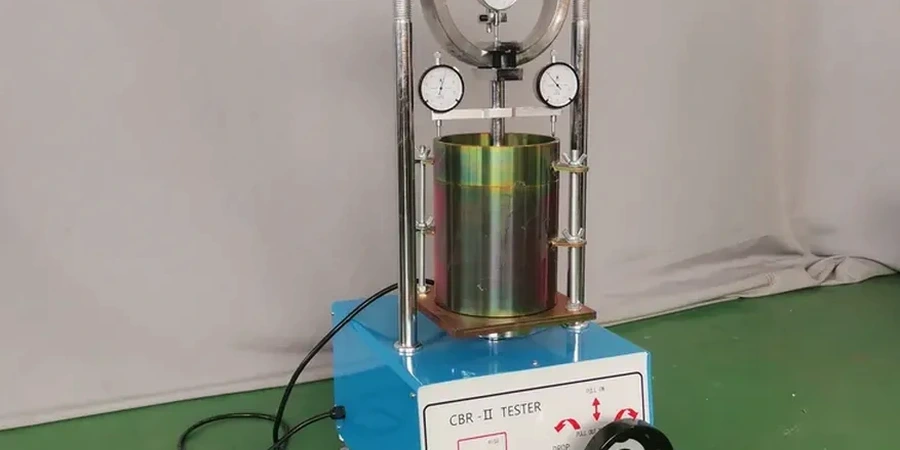
Billings sits at 3,123 feet on the Yellowstone River bluffs, where sandstone and shale formations create abrupt changes in subgrade quality across short distances. The Rimrock escarpment splits the city into two distinct geotechnical zones: shallow clay over bedrock on the west side, and deep alluvial silts across the Heights. When the Montana Department of Transportation or a local developer needs to validate subgrade strength for a new arterial or a commercial pad, the laboratory CBR test provides the quantitative bearing value that governs pavement thickness. Our lab runs soaked and unsoaked CBR on remolded samples compacted to Modified Proctor density, giving your civil engineer the design input required by the current AASHTO pavement design guide. We process samples from Billings, Laurel, Shepherd, and the South Side within 48 hours of receiving compacted specimens. For projects where in-situ density verification is also required, we often pair the lab CBR with a sand cone density test to confirm field compaction meets the lab reference values.

A 2% difference in soaked CBR can change your aggregate base thickness by 4 inches — the lab result directly controls your material bid quantities.
Our service areas

Our approach and scope

The contrast between the Heights and the Rims is where CBR data becomes indispensable. Up on the Rims, weathered sandstone residual soils can show CBR values above 20%, but they degrade quickly when exposed to moisture. Down in the Yellowstone floodplain, fine-grained alluvium often tests below 3% soaked CBR, triggering the need for lime stabilization or a thicker aggregate base course. Our lab follows ASTM D1883 for the standard test procedure, applying the penetration piston at 0.05 inches per minute and recording pressures at 0.1-inch and 0.2-inch penetrations. We report both values and flag any anomalies that suggest improper compaction or sample disturbance. For projects where the native soil simply cannot meet the structural section requirements, we advise clients to evaluate ground improvement alternatives. A stone columns design can densify loose alluvium and raise the equivalent CBR enough to reduce pavement cost, especially in commercial developments east of Airport Road. When the subgrade investigation reveals highly plastic clays, we also recommend running Atterberg limits to correlate plasticity index with expected CBR loss during spring thaw saturation.
Laboratory CBR Testing in Billings — Soil Bearing Capacity for Pavement and Subgrade Design
Technical reference — Billings

Local geotechnical context

The IBC and ASCE 7 require that pavement subgrade be evaluated for bearing capacity and moisture susceptibility — and Billings' freeze-thaw cycles make this non-negotiable. Silty soils in the Heights and Lockwood area are particularly vulnerable to frost heave, which can reduce effective CBR by 40% or more during spring thaw. A laboratory CBR run only on unsoaked samples misses this deterioration entirely. The soaked test, with four days of water immersion and a surcharge weight simulating the overlying pavement, predicts the worst-case subgrade condition. We have seen projects where an unsoaked CBR of 12% dropped to 2.5% after saturation, requiring a complete redesign of the pavement structural section. Performing both soaked and unsoaked CBR, and comparing the swell percentage against the soil's plasticity index, gives your geotechnical engineer the data needed to specify adequate drainage, frost protection, or stabilization with lime or cement before aggregate placement begins.

Need a geotechnical assessment?

Reply within 24h.

Email: contact@geotechnicalengineering.biz

Relevant standards

ASTM D1883 — Standard Test Method for CBR of Laboratory-Compacted Soils, AASHTO T 193 — The California Bearing Ratio, ASTM D1557 — Modified Proctor Compaction, IBC Chapter 18 — Soils and Foundations, MDT Materials Manual — Subgrade Evaluation

Technical data

ParameterTypical value
StandardASTM D1883 / AASHTO T 193
Sample conditionSoaked (4-day immersion) and unsoaked
Compactive effortModified Proctor (56,000 ft-lbf/ft³)
Penetration rate0.05 in/min
Surcharge weight10 lb minimum annular surcharge
Reported valuesCBR at 0.1" and 0.2" penetration, swell %
Mold size6-inch diameter standard mold

Q&A

What is the typical cost for a laboratory CBR test in Billings?

A single-point laboratory CBR test with a complete moisture-density curve and swell measurement typically runs between US$120 and US$220, depending on whether you need soaked, unsoaked, or both conditions. If the test includes chemical stabilization screening with multiple binder percentages, the cost increases accordingly.

How long does the lab CBR test take from sample drop-off to report?

Standard turnaround is 5 to 7 business days. The four-day soaking period required by ASTM D1883 governs the schedule. Unsoaked CBR results can be available within 48 hours. We do offer expedited processing for an additional fee when project deadlines demand faster data.

Do you accept field-compacted samples from our own technician?

We do, but we recommend our lab perform the compaction because precise moisture control and density measurement are critical to CBR accuracy. If you prepare samples in the field, we require them to be delivered in sealed containers with a chain-of-custody form, and we will verify density and moisture upon receipt.

What CBR value does MDT require for residential street subgrade in Billings?

MDT and the City of Billings Public Works Department typically require a minimum soaked CBR of 6% for residential and light commercial street subgrade. Values below that trigger either over-excavation and replacement, lime stabilization, or an increased aggregate base thickness per the AASHTO 1993 design chart. We include the applicable design input values in our report narrative.

Location and service area

We serve projects in Billings and surrounding areas. More info.

View larger map