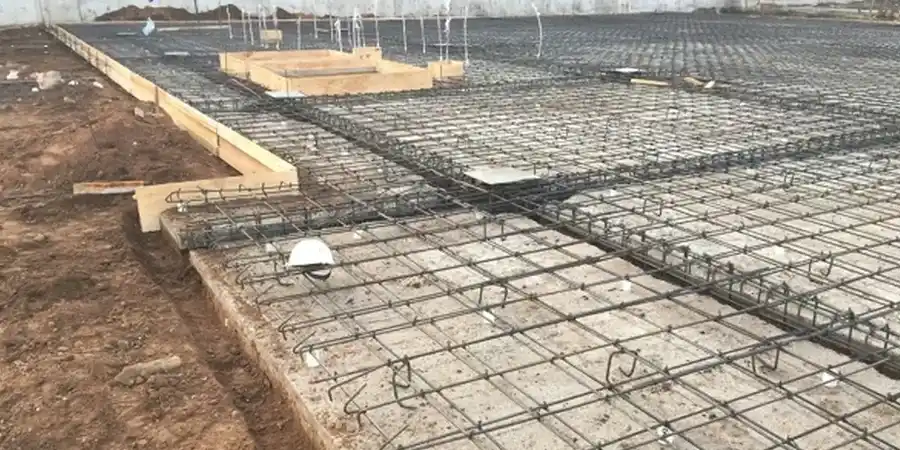
Our team sets up the drilling rig right on the Billings lot, pulling continuous Shelby tube samples from the stiff clays and sandstone residuum that define the Yellowstone River valley. We log every core run, measure bedrock refusal depth, and ship undisturbed specimens to the lab the same day. In a city where expansive clay seams alternate with fractured sandstone, a rigid raft/mat foundation design distributes building loads across the entire footprint, cutting differential settlement risk. We combine borehole data with lab consolidation curves to size the mat thickness, reinforcement layout, and subgrade preparation steps that match Billings' specific stratigraphy. The process feeds directly into the CPT test results when soft lenses appear below 15 feet, giving the structural engineer continuous tip resistance and sleeve friction profiles without gaps.
A properly designed mat foundation in Billings cuts differential settlement to under half an inch across 100 feet, even with variable sandstone weathering depths.