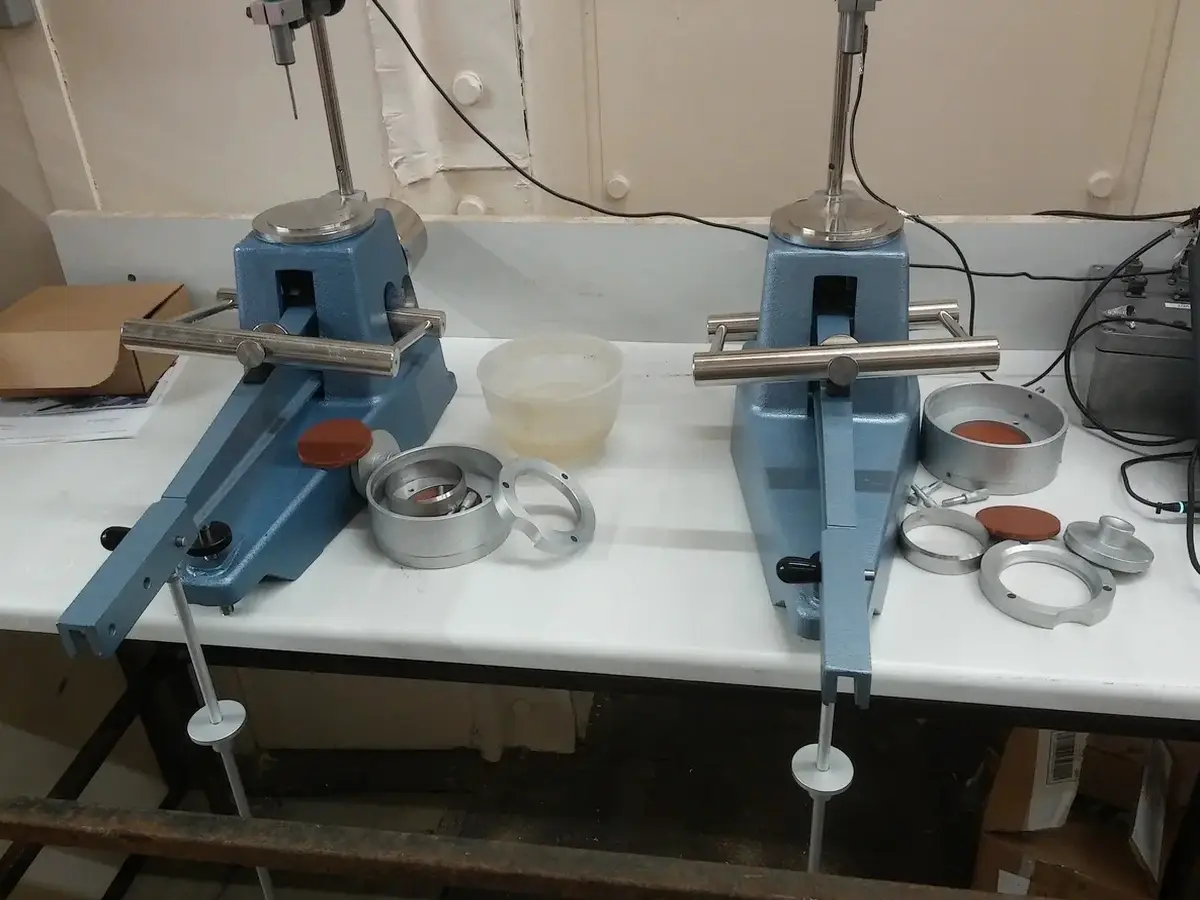
A contractor out on the Rimrock Road corridor called us last fall. He had a dozen soil samples from a commercial pad site and the lab results looked fine for moisture and density. But the structural engineer flagged one thing: the clay fraction was swelling during the wet season. Without Atterberg limits, nobody could say how much. We ran the liquid limit and plastic limit on all twelve samples. Half of the material classified as CH fat clay with a plasticity index above 30. That changed the footing design from shallow spread footings to a much deeper system. Billings sits on a mix of Cretaceous sedimentary rock and expansive clay layers deposited by the Yellowstone River system, so plasticity isn’t rare—it’s expected. The Atterberg limits test gives you the numbers to quantify that behavior before a foundation gets poured.
A plasticity index above 25 in Billings clay almost always means you need to over-excavate or stabilize—ignoring it gets expensive fast.